Español
 English
 Português
 عربي
عربي 한국어
한국어

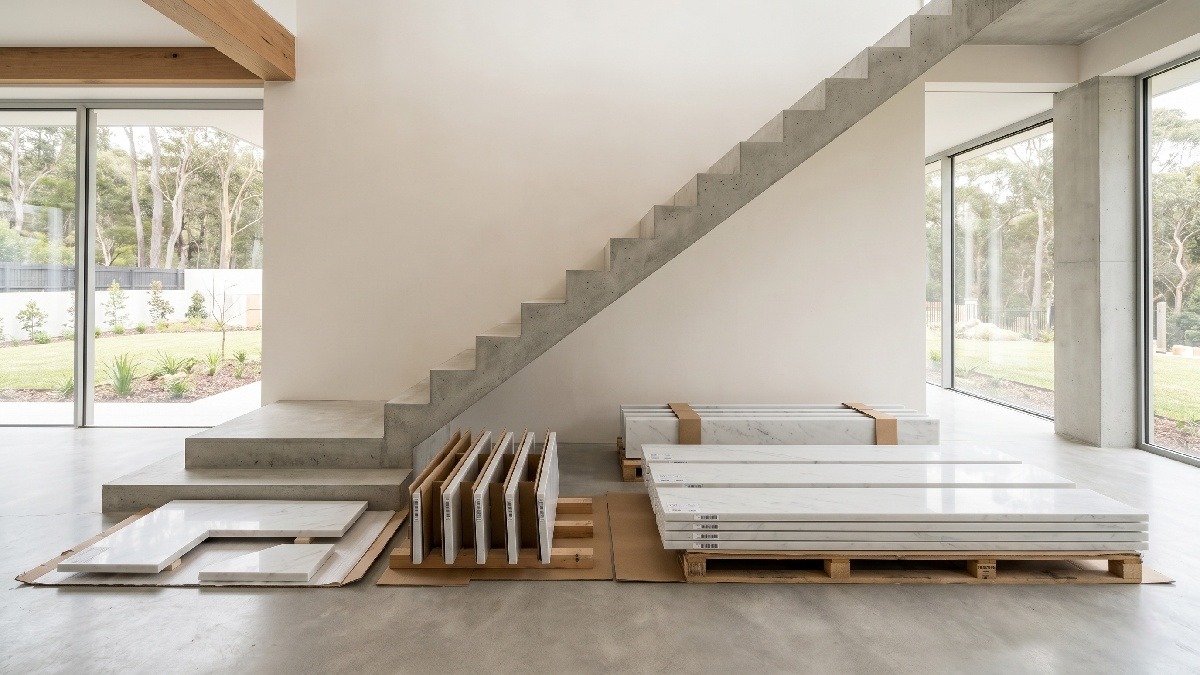
Las escaleras de piedra a menudo parecen sencillas desde la distancia.
Un hilo.
Un elevador.
Un aterrizaje.
Un panel lateral.
Un detalle de nariz.
Un borde pulido.
Debido a que estos componentes se repiten paso a paso, algunos compradores tratan la piedra para escaleras como si fuera simplemente otra versión de las baldosas para pisos.
Eso es un error.
Los componentes de piedra de las escaleras conllevan un nivel de responsabilidad diferente. Se camina sobre ellos, se ven de cerca, los usuarios los tocan, se alinean con la estructura y se repiten en una secuencia donde los pequeños errores se hacen muy visibles. Una escalera no es un suelo plano. Es una instalación tridimensional con movimiento, dirección, seguridad, exposición de bordes y orden de instalación.
Es por eso que Componentes de piedra para escaleras en interiores de proyectosRequieren más cuidado antes de su fabricación que las baldosas estándar.
Un material de piedra de gran belleza puede dar lugar a una escalera deficiente si los peldaños, las contrahuellas, los remates, el grosor, los bordes, la disposición y la numeración no se controlan adecuadamente.
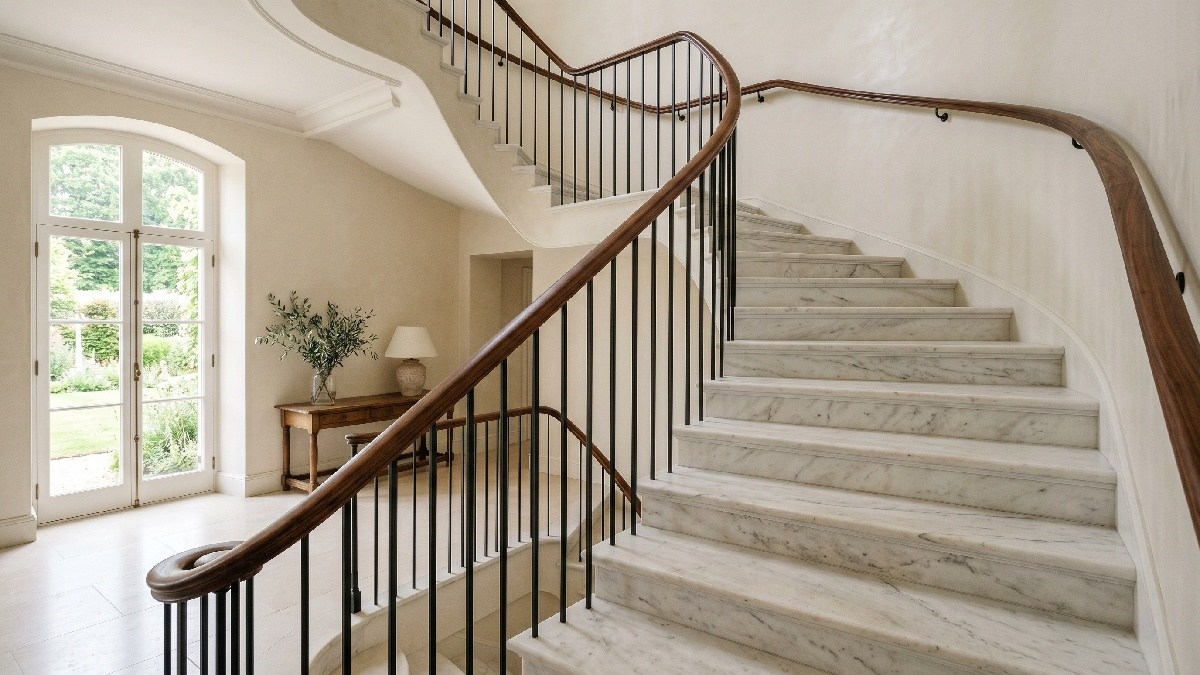
Lo que más se ve es un panel de pared.
Las baldosas del suelo se pisan principalmente.
Una escalera se percibe y se utiliza mediante movimientos corporales repetitivos.
Cada paso debe sentirse estable.
Cada peldaño debe estar alineado correctamente.
Cada contrahuella debe mantener el ritmo de la escalera.
Cada borde debe ser seguro y uniforme.
Cada rellano debe conectar visual y físicamente con el resto de la escalera.
Esto hace que la piedra utilizada en las escaleras sea diferente de las baldosas estándar.
Una baldosa a veces puede tolerar pequeñas variaciones visuales en una superficie amplia. Un peldaño de escalera no puede disimularse tan fácilmente. Los usuarios miran cada escalón, perciben los bordes, sienten el ritmo de la altura e interactúan directamente con la superficie.
En trabajos de escaleras, las pequeñas imprecisiones parecen mayores.
Una escalera no es un conjunto de piezas de piedra independientes.
Los peldaños, las contrahuellas, los rellanos, los zócalos, los revestimientos laterales y los detalles del borde de la escalera deben armonizar. Si una parte falla, toda la escalera puede verse descompensada.
Antes de la fabricación, el proyecto debe aclarar lo siguiente:
·tamaño de la banda de rodadura
·altura del elevador
·dimensiones de aterrizaje
·forma de la nariz
·perfil de borde
·espesor
·sobresalir
·ubicación conjunta
·requisito del panel lateral
·detalle del zócalo
·secuencia de instalación
·tolerancia del sitio
Para escaleras sencillas, esto puede ser fácil. Para escaleras de hotel, de villa, comerciales, curvas o en áreas públicas, la cosa se complica.
Un conjunto de escaleras debe evaluarse como un sistema conectado, no como piezas separadas.
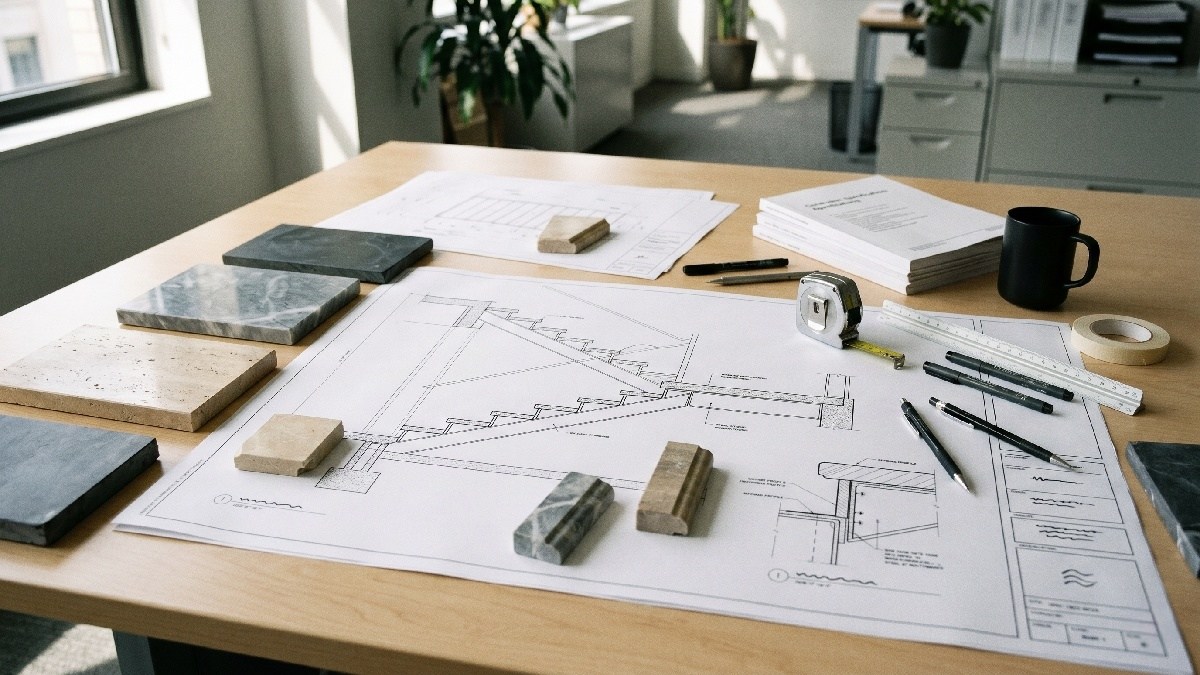
No todas las piedras atractivas son automáticamente adecuadas para todas las escaleras.
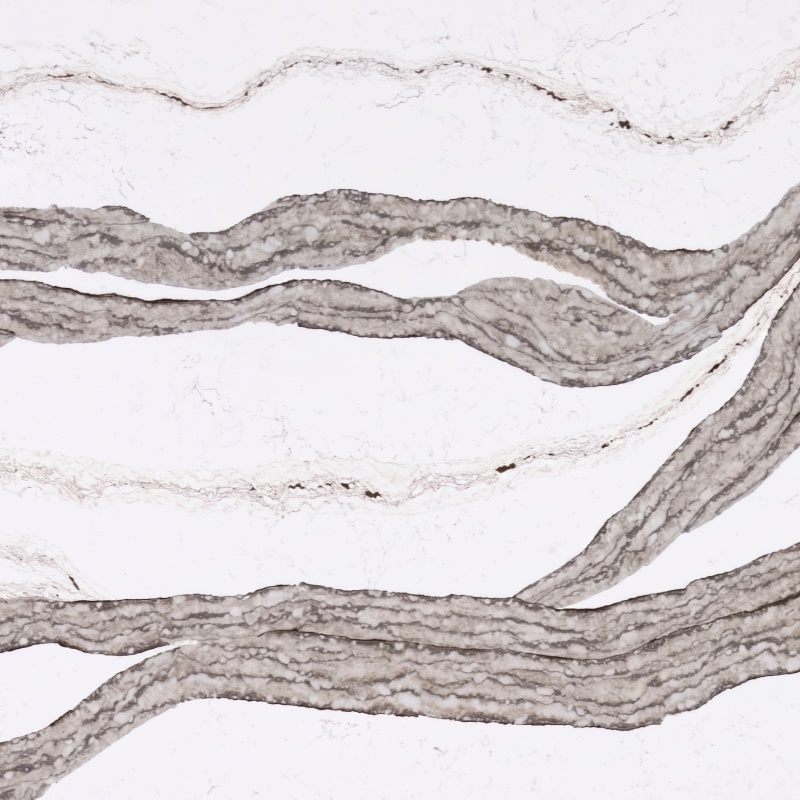
Para Materiales de mármol natural para escaleras en proyectos arquitectónicosEl efecto visual puede ser excelente, especialmente en villas, hoteles, clubes y espacios interiores refinados. Sin embargo, los compradores deben considerar la dirección de las vetas, la variación natural, el comportamiento de los bordes, el acabado, el grosor y si el material puede soportar las condiciones de uso previstas.
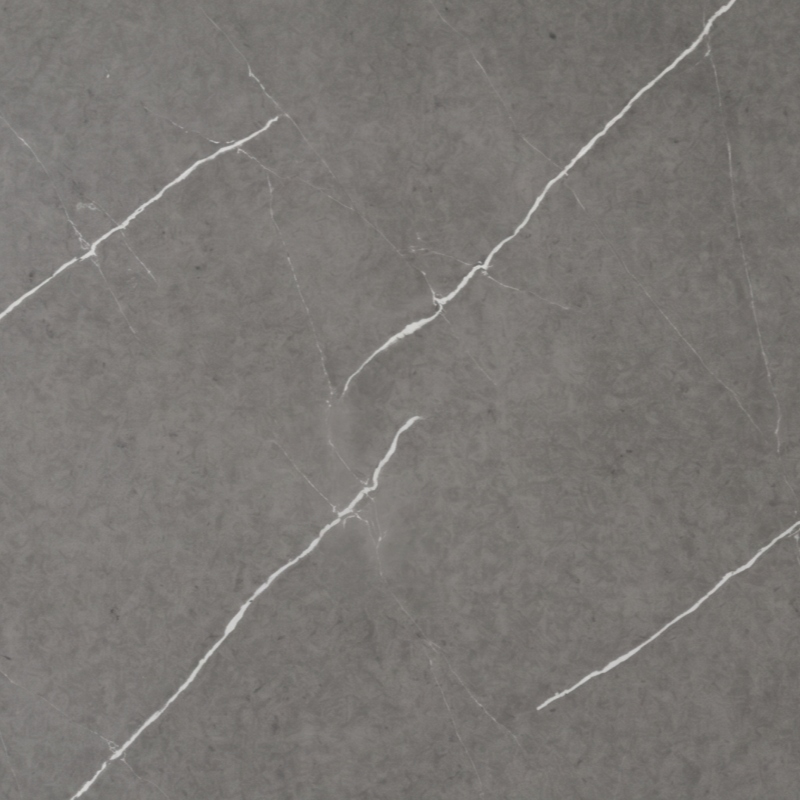
Para Losas de mármol artificial para aplicaciones en escaleras comercialesEl atractivo reside en un color más controlado, una uniformidad visual más suave y una gestión de costes práctica para algunos proyectos de interiorismo. Sin embargo, es necesario revisar cuidadosamente el acabado de los bordes, el acabado de la superficie, las normas de seguridad para escaleras y la uniformidad de los componentes.
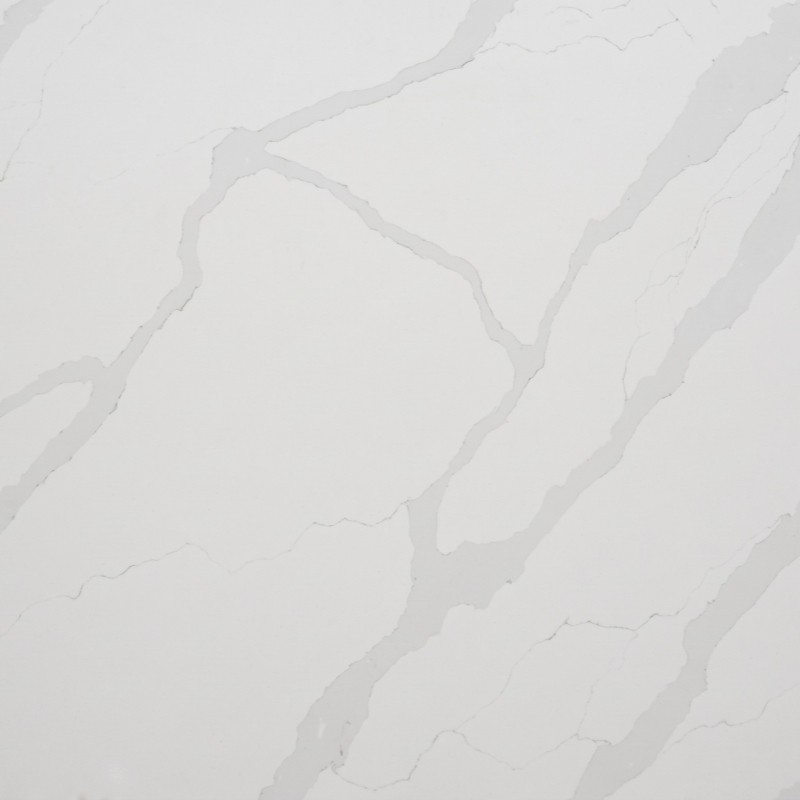
Para Piedra de terrazo para interiores de hoteles y locales comerciales.Las escaleras pueden crear un aspecto duradero y con un diseño atractivo. Sin embargo, la exposición del agregado, la calidad de los bordes, el grosor, el acabado antideslizante y la uniformidad entre peldaños y contrahuellas requieren una planificación previa al corte.
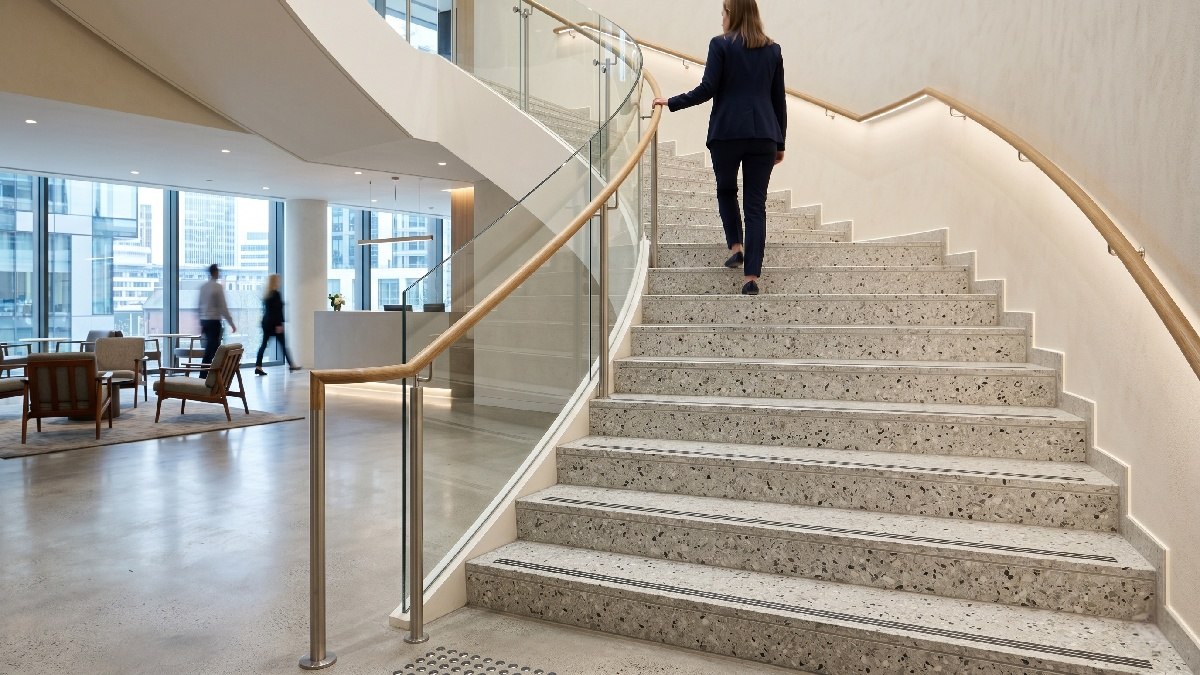
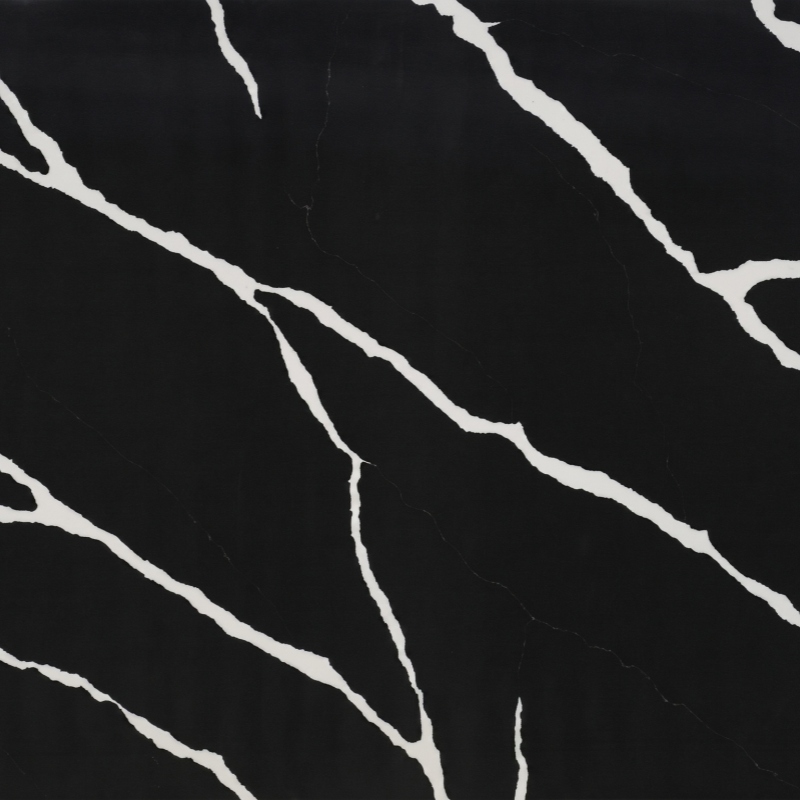
La piedra de cuarzo puede utilizarse en detalles específicos de escaleras o peldaños interiores, según las especificaciones del proyecto. Sin embargo, los compradores deben evitar asumir que cualquier material de encimera es apto para escaleras. Las aplicaciones en escaleras requieren consideraciones diferentes en cuanto a resbalones, exposición de los bordes y resistencia a los impactos.
El material adecuado para una escalera no es solo el que tiene buen aspecto.
Es la que mejor se ajusta al diseño, las condiciones de uso, el método de fabricación y las expectativas de mantenimiento.
El borde de un peldaño es uno de los detalles más importantes en una escalera de piedra.
Afecta a la apariencia, la seguridad, el tacto, la durabilidad y la consistencia.
El perfil de un escalón puede ser recto, redondeado, biselado, de punta redondeada, laminado, ranurado o personalizado, según el diseño y los requisitos del proyecto. La elección adecuada depende del material, el grosor, la estructura de la escalera, el estilo de diseño y el uso previsto.
Un control deficiente de los bordes puede generar varios problemas:
·líneas visuales desiguales
·sensación de paso incómodo
·Durabilidad de esquina débil
·apariencia inconsistente de un paso a otro
·mayor riesgo de astillamiento
·Ajuste de instalación en el sitio
Las baldosas estándar suelen ocultar los bordes dentro del revestimiento del suelo. Los peldaños de las escaleras, en cambio, dejan los bordes al descubierto.
Por eso, el acabado de los bordes es tan importante.
Una escalera es una superficie de movimiento.
Esto significa que el acabado de la superficie no debe elegirse únicamente por su apariencia. También debe evaluarse en función de las condiciones de uso y las expectativas de seguridad.
La piedra pulida puede tener un aspecto refinado, pero no siempre es adecuada para todas las escaleras. Se pueden considerar acabados mate, cepillado, ranurado, flameado, arenado u otros acabados texturizados, según el material, el uso (interior o exterior), el tipo de edificio y los requisitos del proyecto.
La cuestión no es que un resultado sea siempre el mejor.
La clave está en que el acabado debe ser intencional.
Para hoteles, villas, interiores comerciales, espacios públicos y zonas de mucho tránsito, el comprador debe consultar la elección del acabado antes de la fabricación. Una vez fabricadas las piezas de la escalera, cambiar el acabado o añadir detalles antideslizantes puede resultar difícil, costoso o visualmente incongruente.
Una escalera no solo debe verse bien en las fotos.
Debería funcionar bien en movimiento real.
La dirección de las venas puede cambiar toda la escalera.
En el caso del mármol veteado o los materiales que imitan el mármol, el control de la dirección es importante.
Si cada peldaño está cortado al azar, la escalera puede parecer incompleta. Si las contrahuellas y los peldaños chocan visualmente, el ritmo de la escalera puede volverse desordenado. Si un rellano cambia de dirección sin intención, la vista lo nota.
Una buena planificación de la dirección de las venas puede ser útil:
·hacer que la escalera parezca continua
·reducir el trastorno visual
·apoyar la dirección del movimiento
·mejorar la sensación de calidad superior del material
·conectar rellanos, escalones y paneles laterales de forma más natural
Esto es especialmente importante para escaleras emblemáticas, vestíbulos de hoteles, interiores de villas y cualquier zona de escaleras donde la piedra se convierta en un punto focal.
La combinación perfecta no siempre es posible ni necesaria.
Pero debe evitarse el desorden accidental.
La medición del terreno importa más de lo que esperan los compradores.
Las escaleras se ven muy afectadas por las condiciones del terreno.
Las estructuras de hormigón pueden no ser perfectamente regulares.
La altura de los escalones puede variar ligeramente.
Las paredes pueden no ser perfectamente rectas.
Es posible que los rellanos no coincidan exactamente con el dibujo.
Los proyectos de renovación existentes pueden tener irregularidades ocultas.
Por este motivo, la elección de la piedra para la escalera no debe basarse únicamente en los planos de diseño iniciales cuando las condiciones del terreno son inciertas.
Antes de la fabricación, compradores y proveedores deben confirmar si se necesitan medidas finales de obra, plantillas o planos de taller actualizados. Esto es especialmente importante en proyectos de renovación, escaleras curvas, rellanos irregulares o revestimientos laterales complejos.
Un dibujo correcto es útil.
Una medición correcta del terreno suele ser más segura.
La numeración y la secuencia no son opcionales.
Las piezas de la escalera deben ser fáciles de identificar.
Una escalera puede incluir docenas o cientos de piezas de aspecto similar. Los peldaños, las contrahuellas, los rellanos, los paneles laterales, los zócalos y los remates deben seguir un orden de instalación específico.
Si la numeración no es clara, el equipo de obra podría perder tiempo clasificando las piezas. Peor aún, podrían instalarlas en el orden incorrecto.
Para los peldaños de la escalera, cada pieza debe coincidir claramente con el dibujo. La etiqueta debe indicar la longitud de la escalera, el nivel del piso, el número de escalón y la dirección de instalación cuando sea necesario.
Aquí es donde capacidad de fabricación y procesamiento de piedrase vuelve importante. Un proveedor no solo debe cortar la piedra, sino también organizar el pedido de manera que el instalador pueda entenderlo.
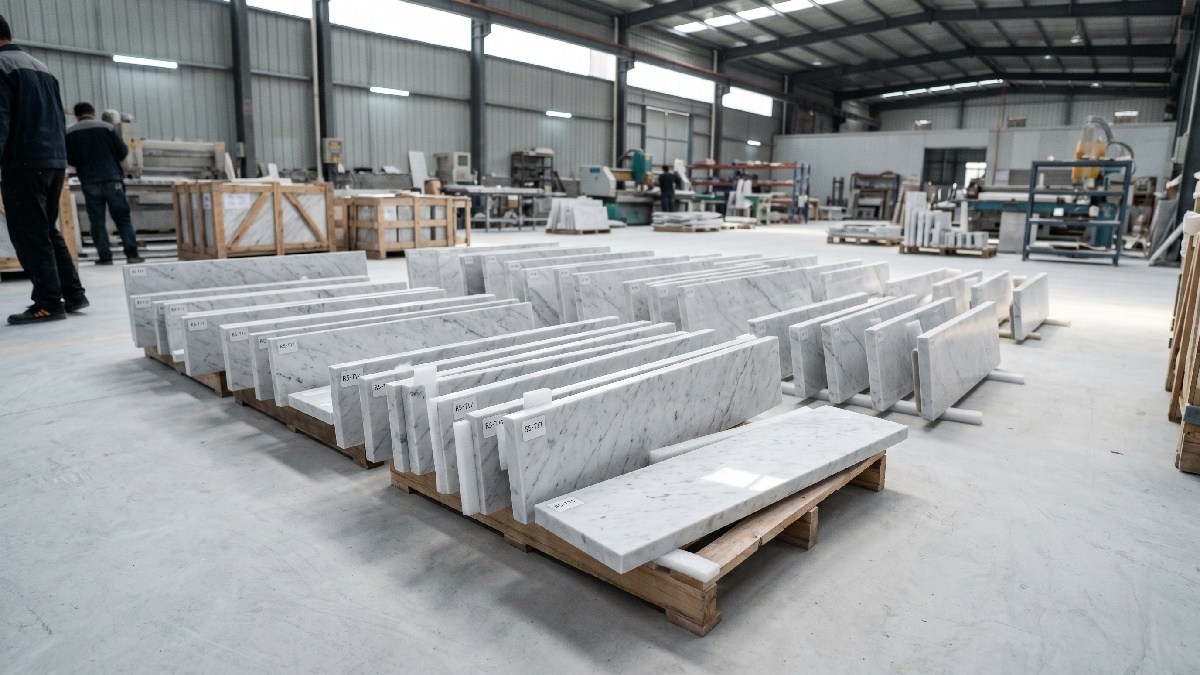
Los componentes de las escaleras suelen tener bordes acabados expuestos. Estos son más vulnerables que los laterales de las baldosas comunes.
El embalaje debe proteger:
·bordes pulidos
·perfiles de nariz
·esquinas delgadas
·huellas largas
·piezas de aterrizaje
·paneles de revestimiento lateral
·secuencia etiquetada
·caras terminadas visibles
Para el ámbito internacional Suministro de piedra para proyectos procedente de ChinaEl embalaje debe cumplir una función más allá de simplemente resistir el envío. También debe facilitar al contratista la descarga, clasificación e instalación de las piezas en el orden correcto.
Un borde de escalera dañado no es un problema menor. Es visible, difícil de ocultar y, a menudo, costoso de reemplazar.
Por eso, el diseño del material de embalaje para escaleras debe tener en cuenta tanto la protección como la secuencia de instalación.
La piedra de la escalera demuestra la verdadera disciplina del proveedor en el proyecto.
Una escalera expone rápidamente la disciplina de los proveedores.
Si la selección de materiales es deficiente, la variación se hace visible paso a paso.
Si el corte es impreciso, la instalación se dificulta.
Si el acabado de los bordes es irregular, la escalera pierde elegancia.
Si la numeración no está clara, el equipo de obra pierde tiempo.
Si el embalaje es deficiente, los bordes expuestos pueden llegar dañados.
Por eso, los componentes de las escaleras no deben tratarse como pedidos de baldosas estándar.
Necesitan un proveedor que entienda de fabricación de proyectos, no solo de venta de losas.
Un buen paquete de planos para escaleras demuestra que el material, el dibujo, el corte, el acabado, la numeración, el embalaje y la comunicación se han gestionado de forma conjunta.
Considerándolo todo
Las escaleras de piedra requieren más cuidado que las de baldosas estándar porque combinan función, movimiento, seguridad, estructura e impacto visual.
No son simplemente superficies instaladas.
Se adquieren experiencia paso a paso.
Para compradores, contratistas, diseñadores e importadores, el mejor momento para controlar un proyecto de escalera es antes de que comience la fabricación. El tamaño de los peldaños, la altura de las contrahuellas, el perfil del borde, el acabado, la dirección de las vetas, las medidas del sitio, la numeración y el relleno deben revisarse con anticipación.
Una piedra hermosa puede hacer que una escalera luzca impresionante.
Un proceso de fabricación controlado lo hace construible, instalable y fiable.
Para la selección de materiales, la revisión de la fabricación y el apoyo a la exportación, los compradores pueden Contacta con Aoli Stone para obtener ayuda con tu proyecto de escalera de piedra..



 IPv6 RED SOPORTADA