Español
 English
 Português
 عربي
عربي 한국어
한국어

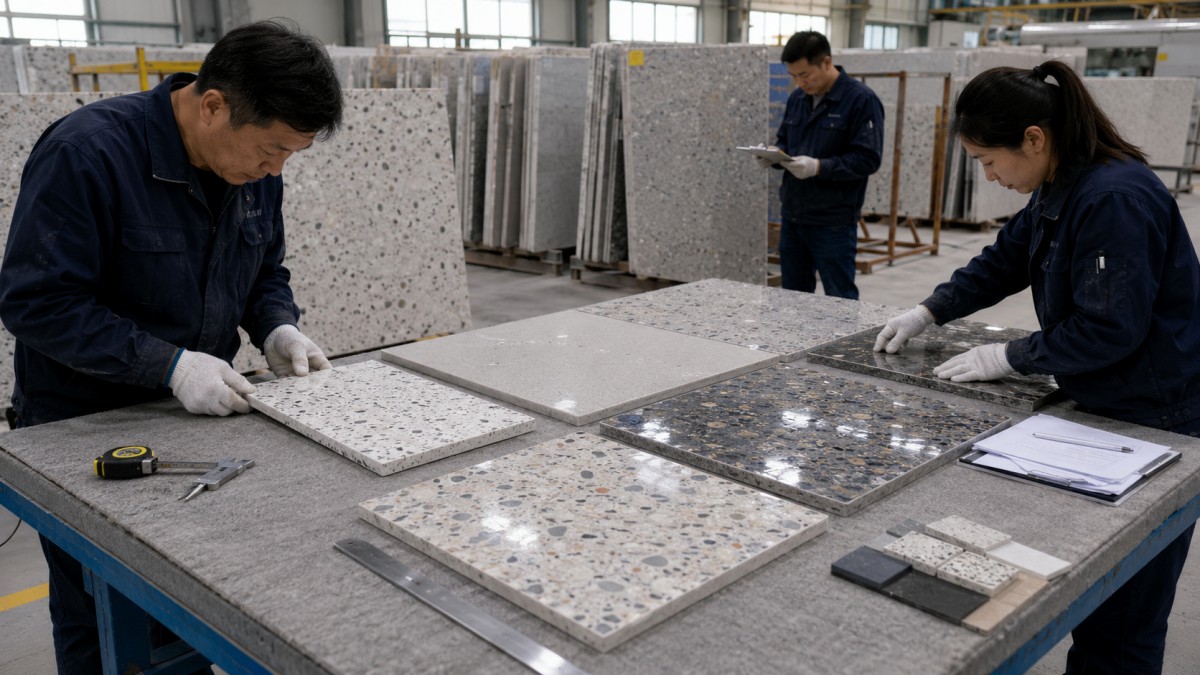
Acabado de terrazo No se trata solo de una cuestión estética. La diferencia entre el terrazo pulido y el mate puede afectar la reflexión, la percepción del deslizamiento, la limpieza, el mantenimiento, la apariencia del color, la comodidad de la iluminación y la aprobación final del proyecto. Un acabado que luce atractivo en la foto de una sala de exposición puede no ser adecuado para todos los pisos, paredes, escaleras, mostradores o áreas públicas.

Antes de aprobar el terrazo pulido o mate, los compradores del proyecto deben confirmar dónde se utilizará el material, cómo interactuarán las personas con él, qué nivel de brillo es aceptable, cómo se mantendrá la superficie y qué estándar de acabado se debe verificar antes del envío. El acabado adecuado no es el que mejor se ve en una muestra de cerca, sino el que se ajusta a las condiciones del proyecto una vez instalado.
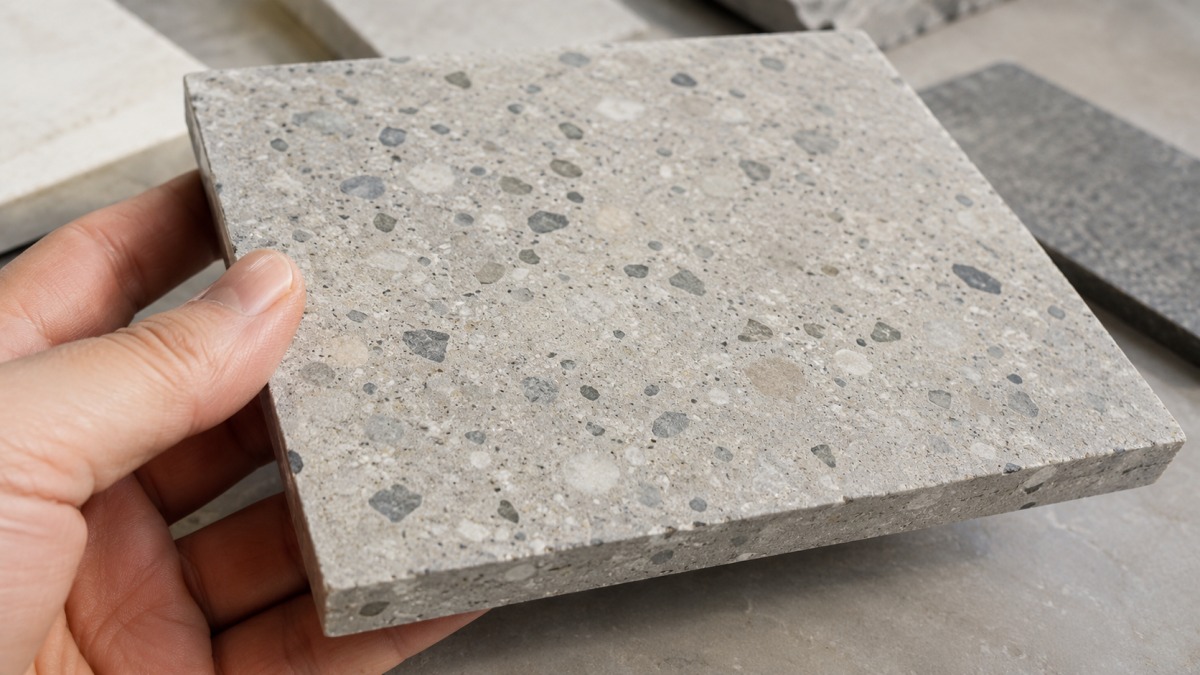
¿Qué es el terrazo pulido?
El terrazo pulido tiene una superficie mate o de bajo brillo. Suele ser más liso que una superficie rugosa, pero menos reflectante que el terrazo brillante. Este acabado le confiere al terrazo un aspecto más suave, sereno y arquitectónico.
El terrazo pulido se suele considerar para suelos comerciales, pasillos de hoteles, baños, locales comerciales, revestimientos de paredes, escaleras y zonas donde no se desea un brillo intenso. Puede aportar un aspecto más natural y menos brillante a la superficie, especialmente cuando el diseño busca un estilo sobrio, cálido o discreto.
Sin embargo, el terrazo pulido no está exento de mantenimiento. Dependiendo del tipo de terrazo, el aglutinante, el agregado, el sistema de sellado y el uso del lugar, una superficie pulida puede mostrar manchas de aceite, suciedad, agua o rastros de limpieza con mayor facilidad de lo esperado. Los compradores deben confirmar el sellado, el método de limpieza y el aspecto superficial aceptable antes de dar su aprobación.
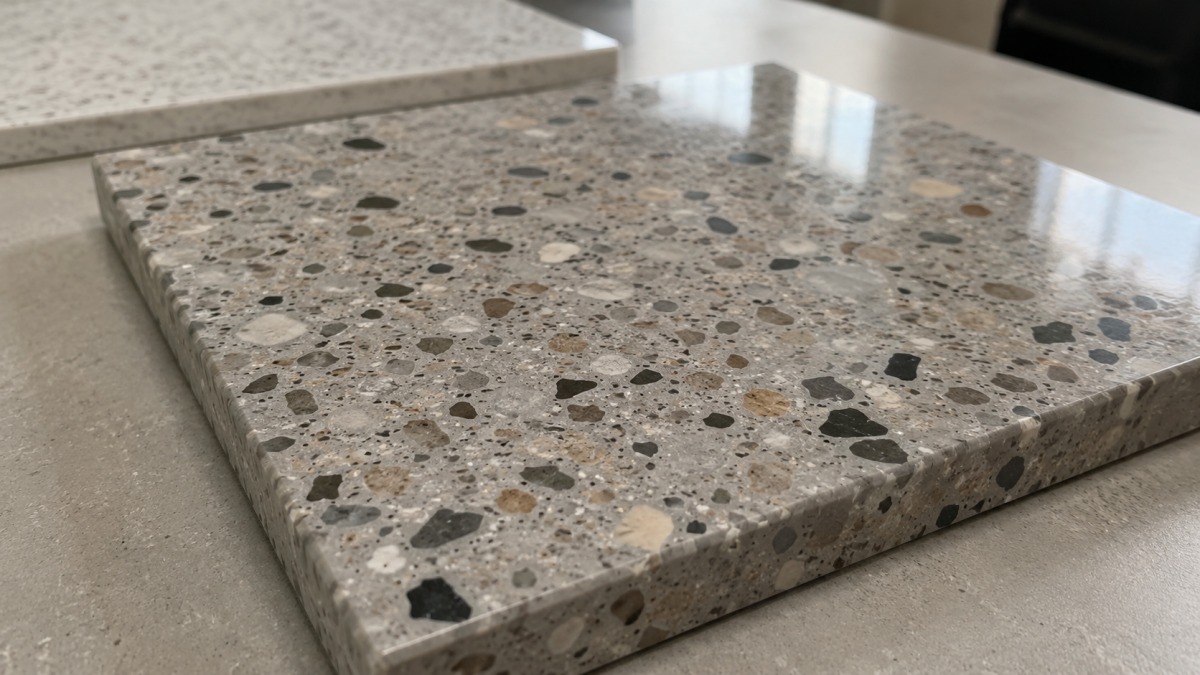
¿Qué es el terrazo pulido?
El terrazo pulido tiene un brillo mayor y una superficie más reflectante. Puede intensificar los colores, realzar la nitidez de las vetas y conferir a la superficie un aspecto más refinado y decorativo. El terrazo pulido se utiliza con frecuencia en diseños que requieren mayor luminosidad, impacto visual o un acabado interior de alta gama.
El terrazo pulido puede funcionar bien para paneles de pared, encimeras, mostradores de recepción, muebles, interiores de tiendas, áreas destacadas y pisos seleccionados donde la iluminación y el plan de mantenimiento sean adecuados.
El riesgo reside en que las superficies pulidas pueden generar reflejos bajo una iluminación intensa. En suelos, especialmente en zonas húmedas o de mucho tránsito, los compradores deben confirmar cuidadosamente las expectativas de resistencia al deslizamiento, las normativas locales, el método de limpieza y si el acabado es adecuado para la aplicación. Una muestra pulida puede lucir elegante sobre una mesa, pero la misma superficie puede comportarse de manera diferente en un vestíbulo, baño, escalera o restaurante.
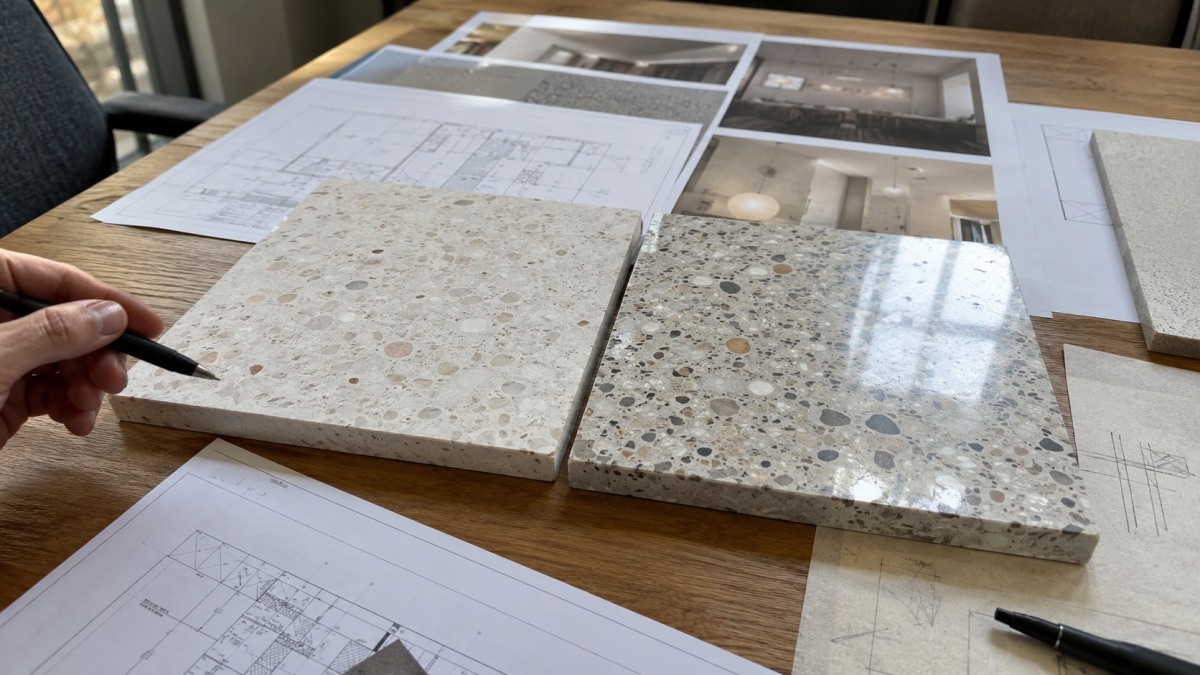
Terrazo pulido vs. terrazo mate: una comparación clave para los compradores de proyectos.
Punto de decisión | Terrazo pulido | Terrazo pulido |
Aspecto superficial | Mate, suave, baja reflexión | Brillante, reluciente, reflectante |
Carácter visual | Tranquilo, arquitectónico, discreto. | Refinado, decorativo, más dramático |
percepción del color | Puede verse más suave o más claro. | Puede hacer que los colores y las virutas parezcan más profundos. |
Reflexión | Menor riesgo de deslumbramiento | Mayor riesgo de reflejos y deslumbramiento |
Aplicaciones comunes | Suelos, pasillos, baños, escaleras, paneles de pared, interiores comerciales | Paredes decorativas, mostradores, muebles, áreas de venta, pisos seleccionados |
Percepción del mantenimiento | Puede presentar marcas dependiendo del sellado y el uso. | Dependiendo del uso y la limpieza, pueden aparecer arañazos, pérdida de brillo o manchas de agua. |
Consideración de deslizamiento | A menudo se prefiere cuando se necesita un brillo menor, pero aún así debe revisarse. | Requiere una revisión cuidadosa para suelos húmedos o de mucho tránsito. |
Riesgo de aprobación | La muestra puede verse demasiado plana si la iluminación es deficiente. | La muestra puede tener mejor aspecto que las condiciones reales del lugar. |
Mejor método de revisión | Muestra más grande, maqueta, muestra final, discusión sobre la limpieza | Análisis de muestras más grandes, análisis de iluminación, análisis de reflejos, análisis de deslizamientos y mantenimiento. |
Ninguno de los dos acabados es siempre mejor. El terrazo mate y el terrazo pulido resuelven problemas diferentes en cada proyecto.
Cómo el acabado cambia el aspecto de las virutas de terrazo
La misma mezcla de terrazo puede tener un aspecto diferente según el acabado. Un acabado pulido puede hacer que los agregados se vean más nítidos y el color base más saturado. Un acabado mate puede reducir el contraste y crear un aspecto más apagado.
Esto es importante durante la aprobación de muestras. Los compradores pueden aprobar un color de terrazo con acabado pulido y luego solicitar un acabado mate, esperando el mismo resultado visual. Esto es arriesgado. El acabado puede alterar la percepción del material.
En el caso del terrazo con un fuerte contraste entre los agregados, el pulido puede realzar el diseño. Para el terrazo con vetas sutiles, un acabado mate puede atenuar el patrón. Si el proyecto requiere un color y un efecto de vetas muy específicos, el acabado debe aprobarse junto con el material, no después.
El color del terrazo no se aprueba completamente hasta que se aprueba el acabado.
El área de aplicación importa más que la preferencia.
Muchos errores en los acabados se deben a que los compradores eligen según sus preferencias, en lugar de considerar la aplicación. Un terrazo pulido puede verse impresionante en una foto de muestra, pero quizás no sea la opción adecuada para el piso de un baño húmedo o una escalera pública con mucho tránsito. Un terrazo mate puede transmitir una sensación de calma y practicidad, pero tal vez no tenga el impacto visual suficiente para un mostrador de lujo o una pared decorativa.
En lo que respecta a los suelos, los compradores deben tener en cuenta el tránsito peatonal, el riesgo de resbalones, la frecuencia de limpieza, la iluminación, la disposición de las juntas o lechada y si la zona puede mojarse.
Para los paneles de pared, el terrazo pulido puede ser aceptable, ya que no se camina sobre él. Sin embargo, conviene revisar la reflexión y la iluminación, especialmente en interiores comerciales luminosos.
En el caso de las escaleras, el acabado debe revisarse cuidadosamente. Los peldaños, los bordes, la dirección de la iluminación y el tránsito diario de personas influyen en la percepción de seguridad y en el aspecto del desgaste.
Para encimeras y muebles, el terrazo pulido puede ofrecer mayor profundidad visual, mientras que el terrazo mate puede resultar más suave y natural al tacto. La decisión debe tener en cuenta la resistencia a las manchas, el sellado, la facilidad de limpieza y el uso previsto.
En baños y áreas de hostelería, la aprobación del acabado no debe basarse únicamente en la apariencia. El comprador debe confirmar si la superficie estará expuesta al agua, cómo se limpiará y qué requisitos de rendimiento se aplican en la zona.
Por qué las fotos pueden inducir a error al finalizar la aprobación
Las fotos suelen hacer que el terrazo pulido parezca más atractivo porque el reflejo de la luz crea contraste y profundidad. El terrazo mate puede verse más plano en las fotos que en una habitación real. Esto puede llevar a los compradores a elegir el acabado pulido con demasiada rapidez.
La iluminación también influye en el resultado. Un terrazo pulido bajo la iluminación de una sala de exposición puede parecer elegante, pero bajo luces de techo intensas puede generar reflejos. Un terrazo mate bajo una iluminación tenue puede parecer apagado, pero en un espacio con luz natural puede transmitir una sensación de calma y exclusividad.
Los compradores no deben aprobar el acabado basándose únicamente en una foto de primer plano. Para las áreas importantes, es más seguro utilizar una muestra más grande, una maqueta, una foto de la losa completa o una comparación del acabado con iluminación realista.
Lista de verificación para el comprador antes de aprobar el terrazo pulido o mate.
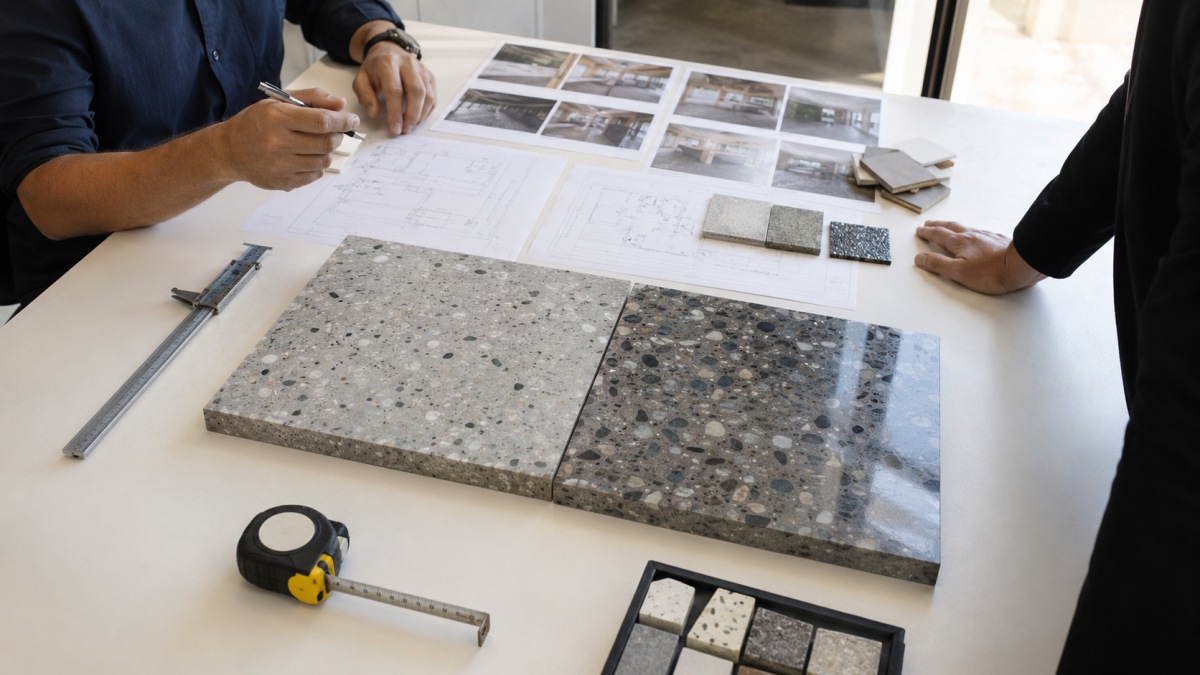
Antes de aprobar el acabado, los compradores deben aclarar lo siguiente:
1.¿Dónde se utilizará el terrazo: en suelos, paredes, escaleras, mostradores, baños, vestíbulos, tiendas, restaurantes o muebles?
2.¿Se caminará sobre la superficie, se tocará, se limpiará con frecuencia o estará expuesta al agua?
3.¿La zona es de mucho tránsito, de poco tránsito, húmeda, seca, pública, privada, interior o semiabierta?
4.¿El deslumbramiento o los fuertes reflejos representan un problema en el espacio?
5.¿El diseño requiere un aspecto mate y sereno o un aspecto más brillante y pulido?
6.¿Se ha revisado el acabado bajo una iluminación realista del proyecto?
7.¿La muestra aprobada utiliza el mismo acabado que la producción final?
8.¿El acabado hará que el color de la muestra parezca más intenso, más suave, más oscuro o más claro?
9.¿Qué método de sellado o mantenimiento se espera?
10.¿Qué nivel de resistencia al deslizamiento o qué expectativas de seguridad se aplican a la zona?
11.¿Quién es el responsable de la limpieza y el mantenimiento final tras la instalación?
12.¿Qué estado de acabado se debe fotografiar o inspeccionar antes del envío?
Si el comprador no puede responder a estas preguntas, la aprobación del acabado queda incompleta.
Señales de alerta antes de la aprobación final
Se debe revisar cuidadosamente un acabado de terrazo si se presenta alguna de las siguientes situaciones:
·El proyecto aprueba el terrazo pulido únicamente porque queda mejor en las fotos.
·El proyecto pasa de estar pulido a estar perfeccionado tras la aprobación de la muestra, sin necesidad de revisar una nueva muestra.
·El acabado no está claramente especificado en el pedido, el plano o el documento de aprobación.
·Se especifica el mismo acabado para suelos, escaleras, encimeras y zonas húmedas sin necesidad de revisión.
·El comprador espera un suelo pulido, pero no ha comprobado si existen problemas de resbalones o reflejos.
·El comprador elige un acabado pulido, pero no cuenta con un plan de sellado ni de mantenimiento.
·El diseñador aprueba una muestra únicamente bajo la iluminación de la sala de exposición.
·El instalador y el proveedor tienen expectativas diferentes en cuanto al aspecto del acabado final.
·El proyecto no define quién se encarga de la limpieza final, el sellado o el mantenimiento posterior a la instalación.
·No se solicitan fotos del acabado previo al envío ni ningún estándar de inspección.
Estas señales de alerta pueden dar lugar a disputas tras la instalación, ya que la calidad del acabado suele juzgarse tanto visual como emocionalmente. Cuanto más subjetiva sea la expectativa sobre el acabado, con mayor claridad deberá confirmarse antes de la producción.
Una regla sencilla para decidir el final del trabajo.
Elija terrazo pulido cuando el proyecto requiera una superficie más sobria, con menor reflejo y de aspecto más arquitectónico, y cuando la zona necesite un acabado práctico para el uso diario.
Elija terrazo pulido cuando el proyecto requiera mayor luminosidad, una mayor nitidez de las virutas y un efecto visual refinado, especialmente para superficies verticales, encimeras, muebles o áreas específicas que requieran mayor atención.
Para suelos mojados, escaleras, zonas comunes y espacios de mucho tránsito, no apruebe el acabado basándose únicamente en la apariencia. Confirme las expectativas de rendimiento, el método de limpieza, la iluminación y las responsabilidades antes de la producción.
Qué deben preguntar los compradores al proveedor antes de la producción.
Antes de aprobar el terrazo pulido, pregunte:
·¿Podría proporcionarnos una muestra pulida utilizando la misma mezcla de terrazo?
·¿Qué nivel de brillo cabe esperar?
·¿Se sellará la superficie antes del envío?
·¿Cómo se debe limpiar y mantener la superficie pulida?
·¿El acabado mostrará marcas con mayor facilidad en esta aplicación?
·¿Las fotos tomadas antes del envío permiten apreciar claramente el acabado de la superficie?
Antes de aprobar el terrazo pulido, pregunte:
·¿Podría proporcionarnos una muestra pulida utilizando la misma mezcla de terrazo?
·¿Qué grado de reflectividad tendrá la superficie final bajo una iluminación intensa?
·¿Es el acabado pulido adecuado para la zona de aplicación?
·¿La superficie requerirá una limpieza o mantenimiento especial?
·¿Qué ocurre si el acabado se opaca en zonas de mucho tránsito?
·¿Deberían revisarse la resistencia al deslizamiento o los requisitos locales del proyecto?
La aprobación del mejor acabado no es solo visual. Debe incluir el uso, la iluminación, la limpieza, la seguridad y la inspección.
Preguntas frecuentes
¿Es mejor el terrazo mate que el terrazo pulido para suelos?
No siempre, pero el terrazo pulido suele ser la opción preferida cuando se busca una superficie con menor reflexión y un acabado más uniforme. En el caso de los suelos, los compradores deben confirmar el nivel de tránsito, el método de limpieza, el riesgo de resbalones, el sellado y el mantenimiento.
¿Es el terrazo pulido adecuado para proyectos comerciales?
Sí, el terrazo pulido puede ser adecuado para interiores comerciales, especialmente para paredes, mostradores, muebles, áreas de venta y ciertos pisos. Para pisos húmedos o de alto tránsito, el equipo del proyecto debe evaluar cuidadosamente los riesgos de resbalones, reflejos y las necesidades de mantenimiento.
¿El acabado cambia el color del terrazo?
Sí. El terrazo pulido puede intensificar los colores y definir mejor las imperfecciones. El terrazo mate puede suavizar la superficie y dar un aspecto más apagado. Los compradores deben aprobar el acabado junto con el color del terrazo.
¿Pueden los compradores aprobar el acabado basándose únicamente en fotografías?
Las fotos pueden ser útiles, pero es posible que no muestren con precisión los reflejos, la textura, los efectos de iluminación ni el comportamiento de la limpieza. Para áreas importantes, es más seguro utilizar una muestra física, una muestra de mayor tamaño, una maqueta o comparar diferentes acabados.
¿Qué debe constar en el documento de aprobación?
La aprobación debe indicar claramente el tipo de terrazo, el color, el estilo del agregado, el acabado, el espesor, el área de aplicación, las expectativas de sellado, los requisitos de inspección y cualquier problema de rendimiento específico del proyecto.
Si su proyecto es decidir entre terrazo pulido y mateEnvíe la zona de aplicación, el nivel de tráfico, las condiciones de iluminación, el acabado preferido, la referencia de la muestra, el espesor, la cantidad y el plan de instalación. Una revisión del acabado antes de la producción puede ayudar a confirmar si la superficie aprobada funcionará en el proyecto final, y no solo en una foto de muestra.



 IPv6 RED SOPORTADA